

It’s possible to get hot, finished compost from your backyard composting set-up… and in only 6 weeks. Through 40 years of experience trying everything and making fun experiments in my own backyard, I’ve perfected a method that assures you don’t have to wait years before you reap the benefits for your garden! Hot composting does look a little differently in winter, so make sure you read this article next: 5 Ways You Can Compost in Winter
The most important composting tool
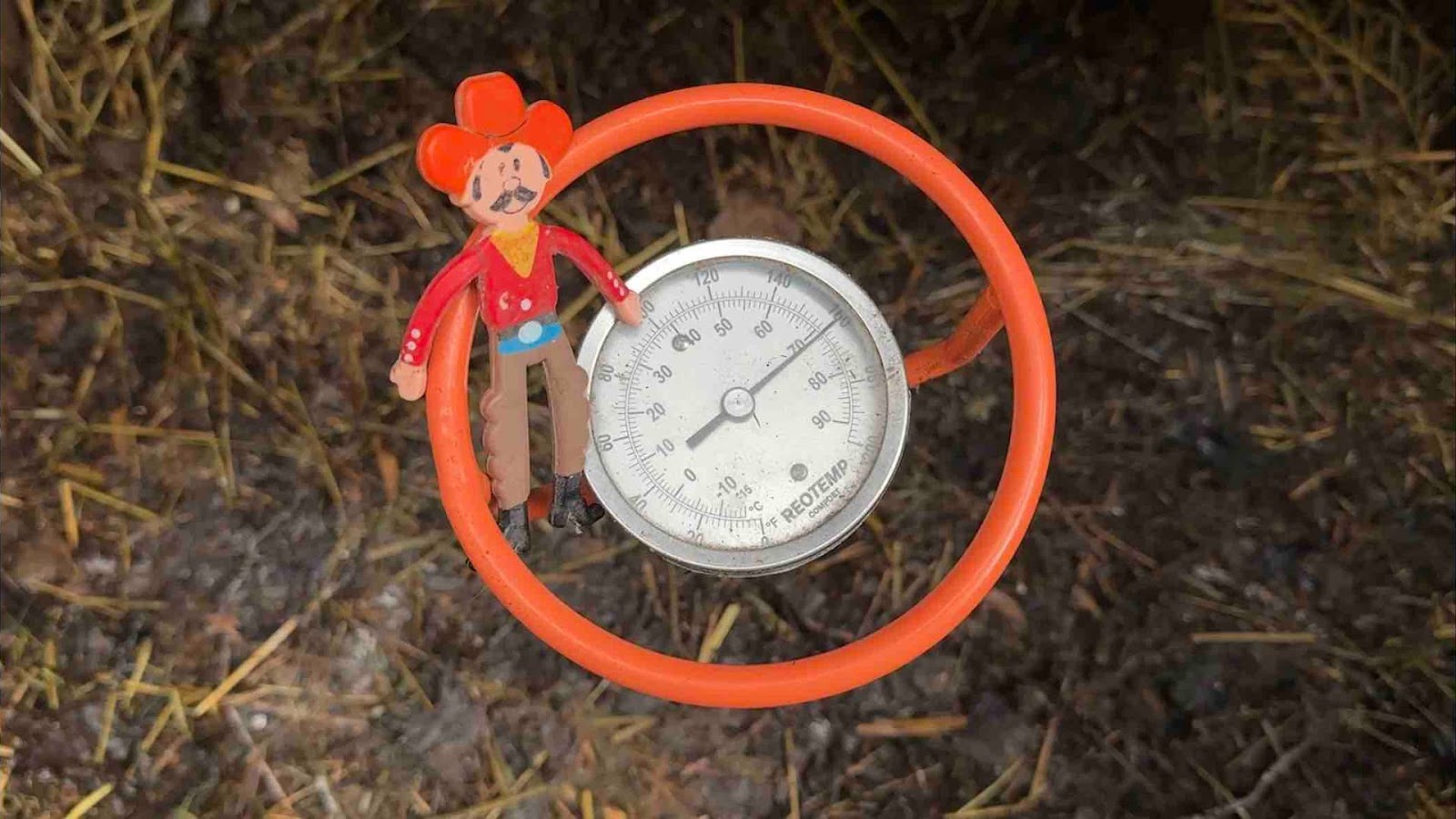
And it’s not what you think! While a pitchfork is super handy for turning your compost, my favorite tool is really this compost thermometer. Monitoring the temperature is critically important because you really need the temperatures to reach 140-160 degrees Fahrenheit (or 60-70 degrees Celsius) for it to properly decompose all the organic materials, reduce weed seeds, and maximize microbial activity. It will also ensure the compost is safe to use in a vegetable garden, especially if you’ve used any animal manures. (See the FAQ section in “Materials You Can Compost at Home” for more information on composting animal waste such as dog or cat poop).
But as soon as you put a compost thermometer to work in your compost pile, I promise that you will notice a dramatic difference and how efficiently you can make compost. These are my preferred options: REOTEMP heavy-duty compost thermometer and REOTEMP soil & compost tumbler thermometer (12-inch)
Turning the compost pile keeps it hot
Frequent turning exposes the materials to oxygen, which fuels the microbial activity essential for breaking down the compost. Think of it as a good upper body workout that benefits both you and your compost. After building your pile, follow a turning schedule: turn it on day two, then again on day four, and once more on day seven.
Continue turning every five days or when the temperature starts to drop. This regular turning helps maintain the high temperatures needed for efficient composting, around 145 degrees Fahrenheit, ensuring your pile stays hot and active.
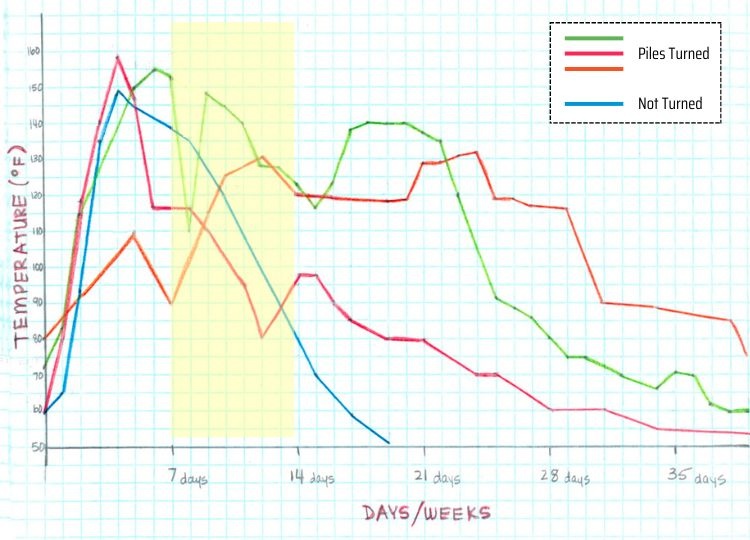
The compost thermometer is your best friend here. As temperatures rise, you can be sure that it’s working. It helps you monitor the internal temperature, ensuring your pile is in the optimal range. When the temperature starts to drop, it's a signal to turn the pile again, keeping the microbial activity at its peak.
Remember, a well-turned, hot compost pile is the secret to rich, fertile compost in just six weeks! If you don’t have a compost thermometer or way to measure, you will have a harder time knowing when to turn your compost and keep it active.

The ingredients you choose to add to your compost bin matters
Compost follows this basic structure. The best mix of ingredients is part nitrogen, part carbon.
- Green organic matter, such as grass clippings
- Brown organic matter, such as dried leaves
- Any and all of your food scraps and kitchen waste
- Add water to maintain a moisture level similar to a damp sponge
For a full list of composting materials, check out this post on what to add to your compost!
Learn more about composting
Whether you’re a beginner or already have a few seasons under your pitchfork, there’s something to be learned from my Beginner's Guide to Composting at Home. Learn about my preferred compost systems, DIY compost bins and more.


