

There’s something delightfully satisfying about harvesting garlic...
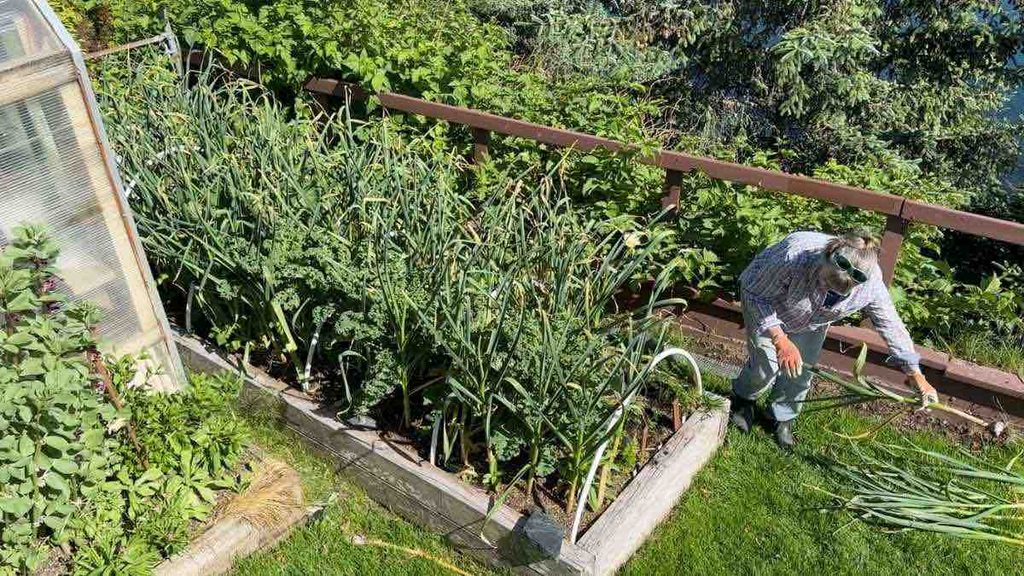
You plant individual cloves in the fall (early September for me in Kodiak, Alaska), tuck them into the soil with an extra layer of compost before winter, and wait. Then, almost 10 months later, you pull up an entire bulb wrapped in papery layers, with each clove plump and ready for the kitchen.
Speaking of kitchen things, you might enjoy my video about garlic scape pesto. YUM.
But hey, pulling garlic out of the ground is only the beginning of your garlicky journey.
When is garlic ready to harvest?
How do you cure it?
And which bulbs should you store for later—and which should you eat first?
I recently harvested my hardneck garlic and decided to take you along. In a video,, that is. I show you what I look for at harvest time, how I dry and cure garlic, and the simple way I sort the bulbs for storage. (We store it in the garage over the winter).
And then [DANG] my tripod fell over.
Sheesh. Right in the middle of filming. Stuff happens, right?
Anyway, watch the video, The Simple Art of Harvesting, Drying & Sorting Garlic, to see what happened—and how I take my garlic from harvest to storage.
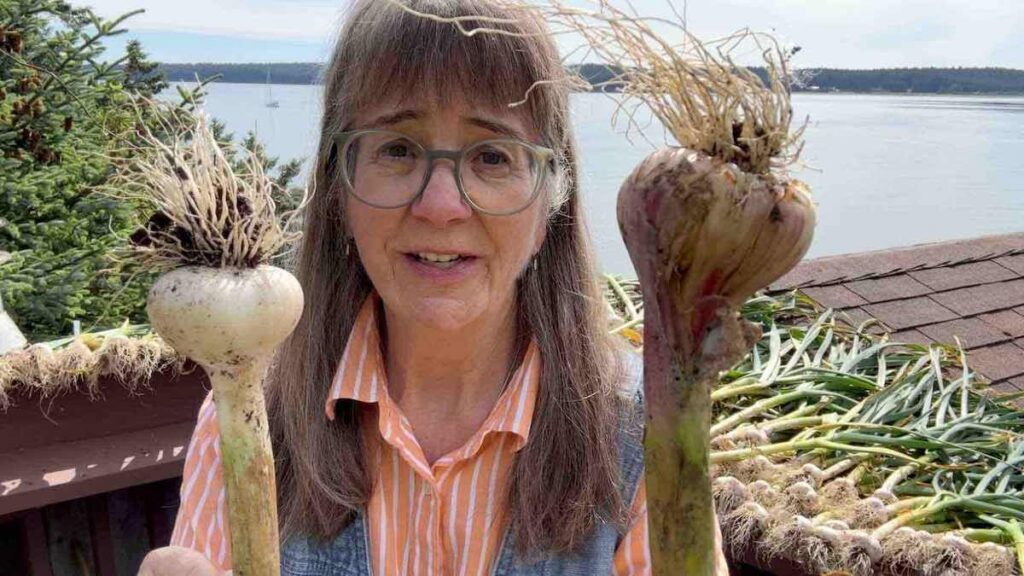
Pay attention to the part where I hold up two garlic bulbs because that tells an important story. One was harvested at just the right time. The other stayed in the ground too long.
Once you see them side by side, the difference is pretty obvious.
When Is Garlic Ready to Harvest?
There are all kinds of rules about when to harvest garlic. You may have heard that you should count the green leaves. Or the brown leaves. Or harvest a certain number of weeks after cutting the scapes.
Those guidelines can help, but I also like to look at the bulb itself.
When a garlic bulb is mature, you should be able to feel the individual cloves rather than one solid blob. At the same time, the papery wrappers surrounding the bulb should still be intact and fairly tight.
Wait too long, though, and those wrappers begin to separate, exposing the individual cloves.
Does that mean the garlic is ruined?
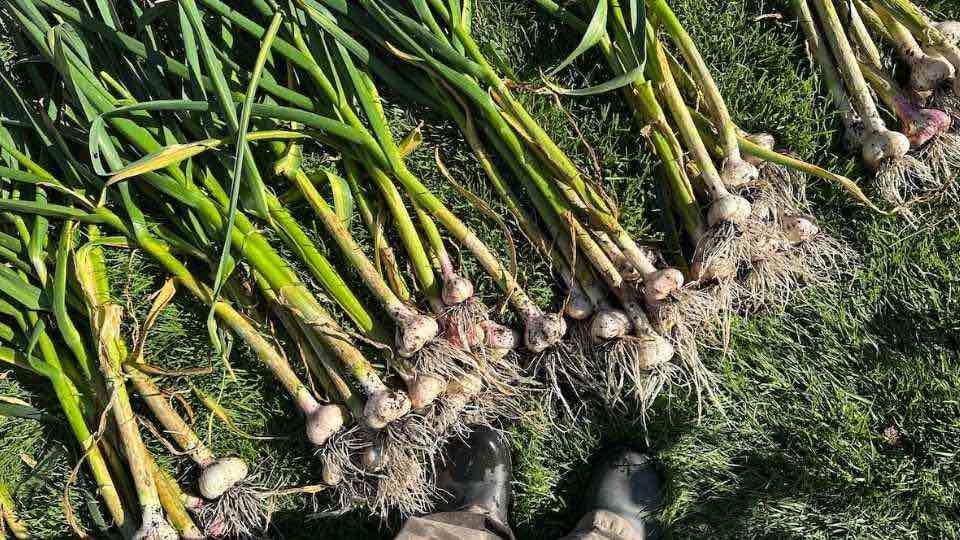
No. But there's a reason I don't put those bulbs in with the garlic I plan to store for months.
I show you exactly what I'm looking for in the video.
How to Dry and Cure Garlic After Harvesting
Once garlic comes out of the ground, the job isn't finished, because before you put it into storage, garlic needs time to dry and cure.
You want a dry location with good air circulation.
Here in Kodiak, a temperate rainforest, where rain is never a stranger, finding such a place can be well, challenging.
My solution?
The roof of our sauna.
As you'll see in the video, on a nice day, I can line my freshly harvested garlic along the roof. It gets plenty of air circulation, and with the ocean in the background and boats passing by, I can't imagine a prettier place for curing garlic.
It works beautifully.
Until it rains.
Then the garlic and I make a quick retreat to the garage, where it's cool and dark.
How to Sort Garlic for Long-Term Storage
Here's something that's easy to overlook: Don't treat every garlic bulb the same.
Once my garlic has dried and cured, I divide it into two groups.
One group is destined for longer-term storage. The other goes into my “eat first” pile.
Both can be perfectly good garlic.
The difference is how well they're likely to store. How's that?
Those papery wrappers I mentioned earlier play an important role. If I waited too long to harvest a bulb and the wrappers have separated, I'll still happily eat the garlic. I simply know that it won't store as well.
The bulbs with nice, tight wrappers?
Those are my keepers.
I store them in a cool, dark place and enjoy them over the coming months.
Which Garlic Bulbs Are Best for Storage?
Sorting also gives me a chance to look closely at each bulb.
Does it feel firm? Are the wrappers intact? Is there anything that looks or feels questionable?
During this harvest, for example, I found a bulb that was unusually soft—almost punky. Something wasn't right.
I might still use what is good, but I certainly wouldn't choose cloves from that bulb for planting next year's crop.
That's another reason sorting garlic matters. You're not simply deciding which garlic to eat first and which to store. You're also getting acquainted with your harvest.
And some of those bulbs may become next year's garlic.
Hardneck Garlic: This Year's Harvest Becomes Next Year's Crop
That's one of the things I love about growing garlic.
Harvest isn't really the end. Especially for this cook!
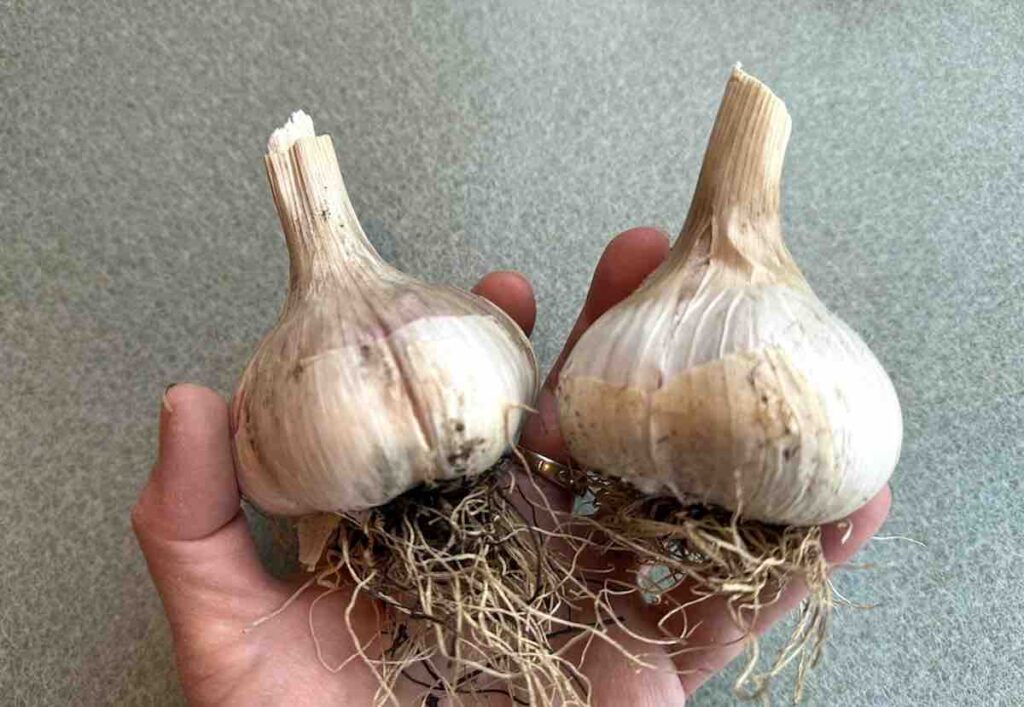
Some of the best bulbs will eventually be broken apart, and individual cloves will go right back into the soil to begin the cycle again.
Two of my favorite hardneck garlic varieties are Music and Russian White. They've earned their place in my garden—and in my kitchen. Eaten raw, they are HOT but full of flavor.
But first, I'm going to enjoy this year's harvest.
And uh, find a better way to set up my tripod.
Watch the video at this link to see how I harvest, dry, cure and sort my hardneck garlic—and what happened when my tripod suddenly decided to film the blue sky.
Thanks for being here... and for being you,

Let’s Keep the Conversation Growing...
Join my newsletter
Follow me on Instagram
Find me on Facebook
Explore my free garden resources
Shop my trusted gear
Browse my courses
Join the UpBeet Gardener community
Purchase my book, Chicken Soup for the Gardener’s Soul
Take my “What’s your composting style?” quiz
Watch the PBS documentary about our garden


