

It's November, and as the days grow shorter and temperatures drop, our gardens settle in for a long winter's nap. But what about the plants growing on our windowsills?
Like all plants, indoor plants have their own ways of slowing down, taking a break, or going completely dormant. And knowing the difference can help us keep our houseplants healthy through our long nights.
Speaking of plants and life's changing seasons: My upcoming book, Cultivating Joy Through Gardening: 365 Daily Meditations, explores the surprising connections between gardening and everyday life. If you'd like to follow its journey toward publication in May 2027, join my free early-interest list for sneak peeks and behind-the-scenes updates.
Why houseplants grow more slowly in winter
Remember, less sunlight means less photosynthesis. This means less energy available for growing new leaves, stems, and roots.
Take spider plants and snake (mother-in-law) plants for example. These popular houseplants may slow their growth to a crawl during winter. Don't expect to see new growth for weeks.
But they're not necessarily dormant. They're still carrying on with the business of being plants, just at a slower pace.
Ficus plants can be more dramatic. Move one from a bright summer location to a dim winter corner, and it may drop leaves by the handful. I learned this firsthand when a friend gifted me a 4-foot ficus plant. "Don't panic if it suddenly drops all its leaves," she warned. It's normal, especially in late fall."
Ficus plants are notorious for complaining about changes in light, temperature, and location. If the branches remain healthy, new leaves can appear when conditions improve.
African violets, on the other hand, can continue growing and blooming throughout winter, especially under grow lights.
Peace lilies (Spathiphyllum) are one of my favorite, easy-care houseplants.
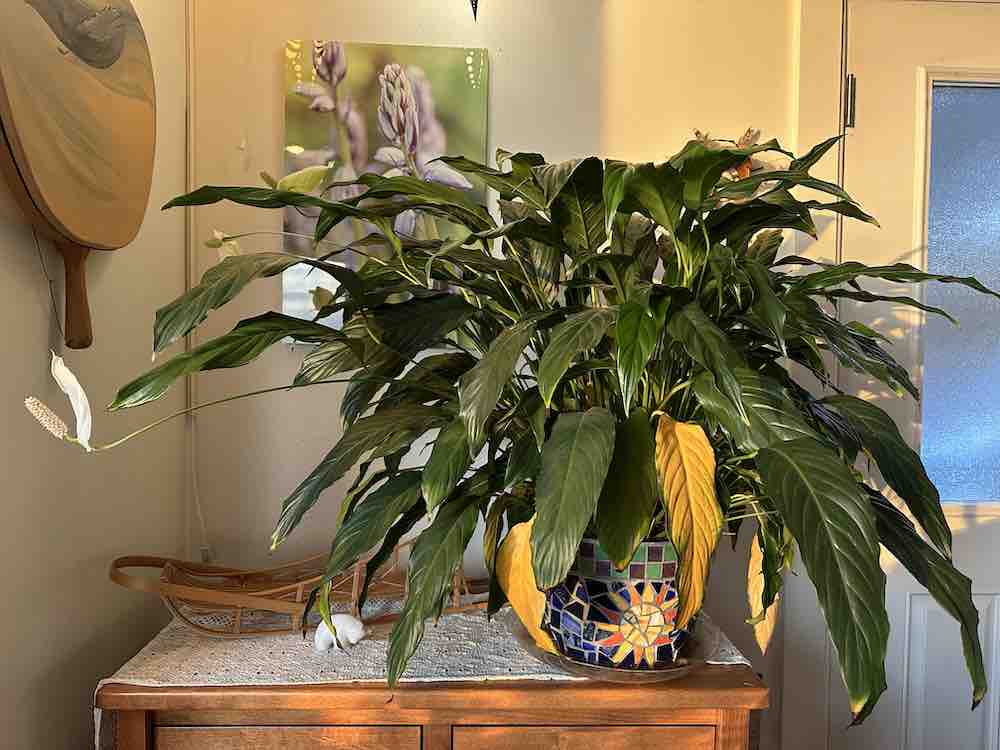
But when I returned recently from a mastermind in Santa Barbara with Jack Canfield (co-creator of the Chicken Soup for the Soul series) for my upcoming book, I noticed several of the leaves had yellowed. "I gave everyone a drink," said Marty when I walked over to inspect them.
Peace lilies: gotta love them. They grow—and often bloom—year-round, although their growth often slows during winter. They're famous for drooping dramatically when thirsty. But yellow leaves can signal the opposite problem: too much water. Did you get that, Marty?
What is quiescence (ecodormancy) in houseplants?
Quiescence (pronounced kwee-ESS-ence) describes a temporary pause in growth caused by unfavorable conditions. Scientists also call it ecodormancy. Any number of things can cause a pause: Not enough light, too cold, too dry. The plant puts growth on hold until conditions improve. Then it can get growing again.
Geraniums (technically Pelargoniums) are a good example. Many local gardeners bring their geraniums indoors before winter If placed in a sunny window or under grow lights, they may continue growing and even flowering.
But move them into a cool, dimly-lit room and growth slows considerably. In this semi-resting state, some leaves may turn yellow and drop. And in some cases stems might become tall and lanky. Water sparingly and hold off on fertilizer. Come spring, give them more light, trim back leggy stems, and watch them take off.
The important thing to remember is that quiescence isn't necessarily a problem. Sometimes it's simply a plant's way of waiting for better conditions.
Houseplant dormancy: Does amaryllis need a winter rest?
Some plants enter a deeper resting state called endodormancy.
Unlike quiescence, which is controlled by outside conditions, endodormancy is controlled by internal processes. Which means that even if you give the plant warmth, water, and plenty of light, it won't necessarily start growing. And to the indoor gardener praying for flowers, this can be frustrating.
Take amaryllis, those spectacular bulbs that produce enormous trumpet-shaped flowers. Amaryllis (Hippeastrum) is often sold as a holiday plant. After flowering, we're often told to stop watering, let the leaves die back, and store the bulb in a cool, dark place. Here's a basic, how to care for Amaryllis, video you might enjoy:
But here's the thing: Amaryllis doesn't necessarily need a dormant period to bloom again. With enough light, regular watering, and occasional feeding during active growth, an amaryllis can keep its leaves year-round.
Those leaves are important. They manufacture and store the energy the bulb needs for its next round of flowers. Some gardeners deliberately give their amaryllis a dry resting period to help schedule flowering. That's a gardening technique, not proof that the bulb requires true endodormancy.
My advice? After the flowers fade, remove the spent flower stalk (only after it completely wilts and dries) but leave the foliage. Give the plant plenty of light and let those leaves do their job.
How to get Christmas cactus and clivia to bloom
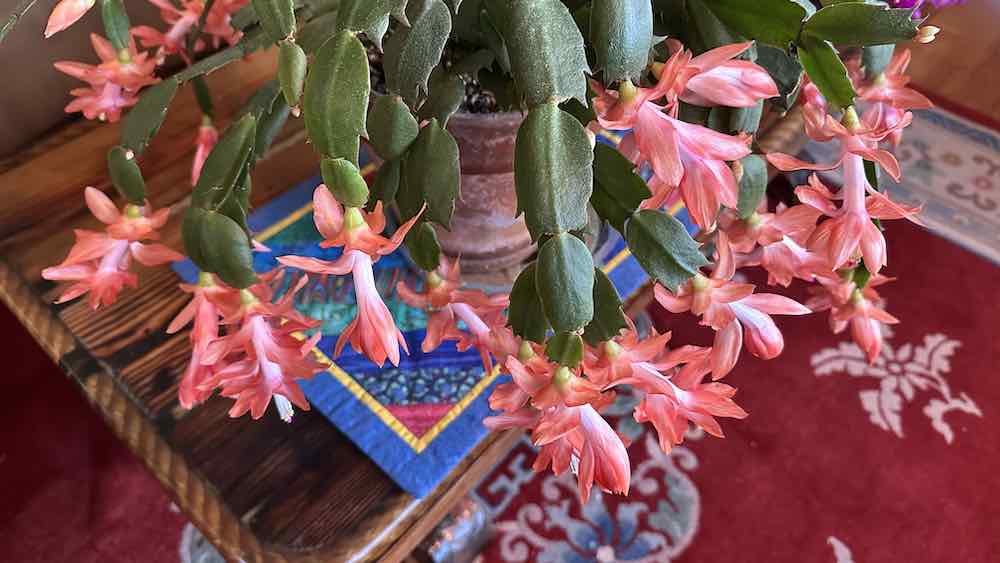
I love my Thanksgiving and Christmas cactus plants. They're are beginning to bloom, just as they do when the days grow shorter. But a Christmas cactus doesn't need true dormancy to produce flowers. Instead, it responds to environmental signals, such as long, uninterrupted nights and cooler temperatures.
This process is called floral induction. In other words, the plant isn't necessarily sleeping. It's getting the message that it's time to make flowers. To get the full scoop on caring for these lovely flowers, watch my video: Christmas Cactus Care - A Simple Guide For Beginners.
Clivia, another wonderful houseplant, behaves a little differently. With its broad, strap-like leaves, clivia can brighten a room with its clusters of orange, yellow, or red-orange flowers like nothing else can.
But clivia needs to be forced into deep dormancy to flower. So, to encourage flowering, clivia needs several weeks of cool temperatures, around 50 to 59 degrees F, along with reduced watering. But don't let its fleshy roots dry out completely.
How often should you water and fertilize houseplants in winter?
With Kodiak's winter weather comes another challenge: dry indoor air. Whether your heat comes from a wood stove or a boiler, indoor humidity often drops as the heating season progresses.
That dry air can suck moisture from leaves, even while reduced winter light slows plant growth.
So should you water more or less? The answer is: It depends.
Rather than watering every houseplant on the same schedule (my father watered all his plants on Saturday, whether they needed it or not), stick a finger into the potting mix. If the top inch feels dry, check whether that particular plant needs water.
An African violet that's actively blooming may need regular watering. A geranium resting in a cool room may need considerably less. Be especially careful with plants that have stopped growing. Wet soil and inactive roots can be a recipe for root rot.
As for fertilizer, a plant that's barely growing doesn't need much food. In fact, feeding a truly dormant plant accomplishes little.
For plants that continue growing, I prefer small amounts of gentle, organic nutrients, such as diluted kelp-comfrey tea or diluted urine.
Remember, potting mixes vary. Some contain added fertilizer (avoid chemical fertilizers like Miracle Gro), while others provide little nutrition.
If you do feed your plants during winter, use only about one-quarter of the normal application rate—plenty for most actively growing houseplants.
Come March-ish, when the days lengthen and growth picks up, you can celebrate by gradually increasing the feeding of your houseplants.
Winter houseplant maintenance: Pruning, cleaning, and pest control
Winter is also a good time to give your indoor jungle some attention.
Remove dead leaves, trim tired stems, and gently loosen crusted soil. Before you do that, though, give your plants 24 hours notice.
One of my favorite tools is a miniature rake made from an ordinary dinner fork. Bend the tips at a right angle, and voilà! You've got a handy tool for reaching between crowded stems.
A pair of small kitchen scissors works beautifully for trimming. And don't forget to inspect your plants for unwanted guests.

Spider mites, aphids, and thrips love to hide among leaves and stems. Keep a jeweler's loupe, especially one with 10-x magnification, close at hand. It can reveal trouble before it spreads.
And pay particular attention to plants that you recently brought indoors.
The best winter houseplant care starts with observation
Perhaps the most important lesson is this: We don't have to push our houseplants to grow all winter. Some will keep producing leaves. Others will slow down. A few will stop growing altogether.
Our job isn't to force them into action or what we think they should be doing. It's to notice what they're doing and respond accordingly.
After all, even gardeners appreciate a little downtime.
Now, if you'll excuse me, my Christmas cacti are putting on quite a show, and I think I'll go admire them.
Have a great week!
P.S. My new book, Cultivating Joy Through Gardening: 365 Daily Meditations, will be published May 1, 2027. It's filled with stories about gardening, life, and the surprising lessons plants teach us. Join my free early-interest list for sneak peeks, behind-the-scenes updates and first news about the book: https://success.gardenerscoach.com/cultivating-joy
Peas support local journalism:
We're fortunate to enjoy a daily newspaper, when around the world, local journalism is fading. Like Joni Mitchell says in her song, Big Yellow Taxi, "You don't know what you've got 'till it's gone."
Let's do our part: Kodiak Public Media, Inc., has been granted 501 (c) (3) Public Charity Tax Exempt Status, which means you can now support the Kodiak Daily Mirror with a tax-exempt donation. Please visit www.KodiakDailyMirror.com and click on Support Journalism. Any questions, call Janet at 907-486-3227 or send an email to: [email protected].
+=+=+=+=+
Got a gardening question? [email protected]
Facebook: https://www.facebook.com/thegardenerscoach
Instagram: https://www.instagram.com/theupbeetgardener/


